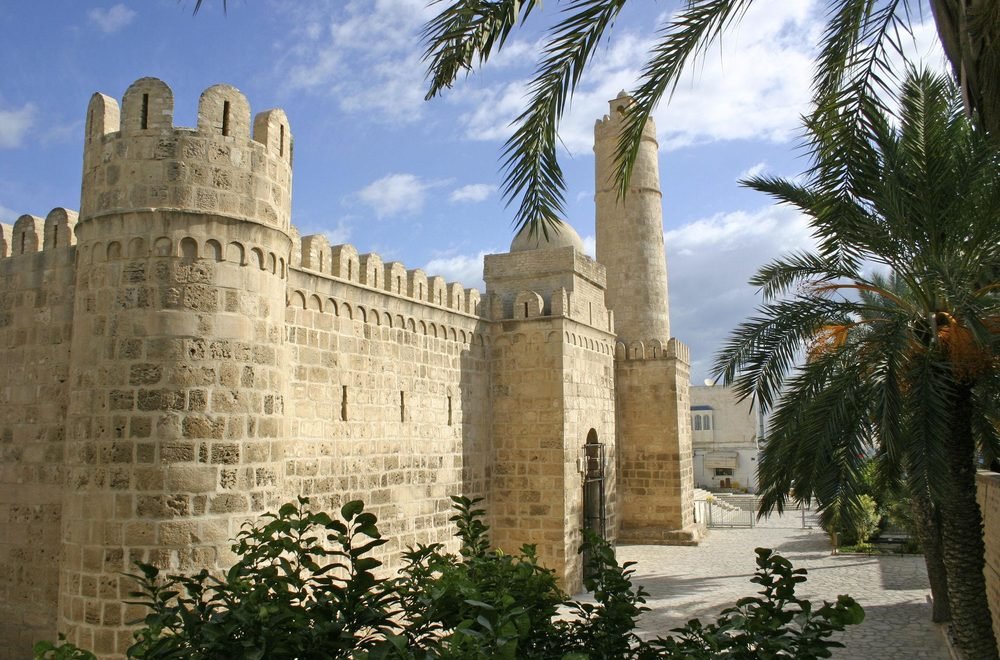
September 2–3, 2027
International Conference on Digital Governance
3rd edition · Sfax, Tunisia · Hybrid
Digital governance and artificial intelligence raise questions about development and innovation in the Middle East and North Africa. How can investment, data and scientific capabilities generate shared benefits for organizations and communities? Addressing this question requires examining the institutional choices, responsibilities and forms of cooperation that shape digital transformation, beyond technology adoption alone (Vial, 2019).
The MENA region is not a homogeneous setting. Economic conditions, available resources, education systems and institutional capabilities differ across countries and organizations. Comparative research should investigate these trajectories without assuming uniform digital maturity or a single transformation model. Morocco provides an anchor for dialogue between North Africa, the Middle East and international partners (UNDP, 2025).
Building on the 2021 edition on management and organization and the 2022 edition on societal transformation, this third edition focuses on sovereignty, cooperation and inclusive development, examining whether actors can choose, shape and evaluate their own transformation pathways.
Digital sovereignty is understood here as the capacity to make decisions about technology use, infrastructure and data processing while managing critical dependencies — at national, territorial and organizational levels, without equating sovereignty with technological self-sufficiency (Pohle & Thiel, 2020; Abraham et al., 2019).
Cooperation raises a complementary question: which resources, rules and knowledge can be shared to strengthen regional capabilities? Partnerships among universities, businesses and public administrations, shared infrastructure and cross-border research can be examined in terms of governance, reciprocity and value distribution (UNESCO, 2021).
Artificial intelligence cuts across these questions. Its use in public services, businesses and universities raises concerns about human oversight, decision accountability, data quality and linguistic and cultural suitability, as well as implications for skills, employment and professional judgment (Mikalef & Gupta, 2021).
Inclusive development requires asking who benefits and who bears the costs of transformation — for service access, SMEs, women, young people and underserved territories. Evaluation should address job quality, accessibility, environmental effects and the distribution of gains, as well as productivity (ILO, 2025).
Guiding question: how can MENA actors govern digital technologies and artificial intelligence to strengthen strategic autonomy, build balanced cooperation and advance inclusive development? Theoretical, empirical and methodological contributions are welcome, together with documented practice-based accounts.
These sources support the research agenda; they do not imply institutional endorsement of the conference.





Dean, Faculty of Computer Science, Alexandru Ioan Cuza University of Iași, Romania
Professor Lenuța Alboaie is Dean of the Faculty of Computer Science at Alexandru Ioan Cuza University of Iași, Romania, and serves on the European Commission’s AI Act Advisory Forum. A computer scientist with more than two decades of experience in research and education, she studies how organizations can share and use data across systems while protecting privacy. She has authored or co-authored more than 100 publications, including research on data governance and interoperability between businesses and public institutions.
She founded and directs iTransfer, the university’s technology transfer center, where she builds partnerships between researchers and industry. She led PrivateSky, a research initiative that developed cloud technologies with built-in data protection. In Romania, she contributes to national discussions on higher education policy and to initiatives that help public institutions adopt digital technologies.
She also advocates for women’s participation in science and technology and co-founded WITchIS, a community that supports women in tech.
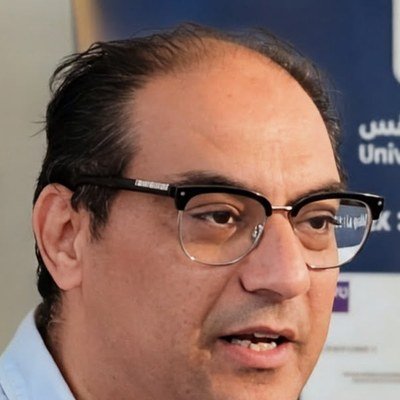
Full Professor of Finance and Accounting, University of Sfax, Tunisia
Anis Jarboui is a Full Professor of Business Administration (Finance and Accounting) at the University of Sfax, Tunisia. He holds a Ph.D. in Finance from the University of Nice Sophia Antipolis, France (2004) and obtained his Habilitation to supervise doctoral research (HDR) in 2008. He served as Dean of the Higher Institute of Business Administration of Sfax from 2011 to 2017.
His research focuses primarily on corporate governance, behavioral finance, financial literacy, auditing, and financial reporting quality. He has published more than 100 articles in peer-reviewed and indexed journals and conferences, and acts as a reviewer for international journals. He is also ranked among the World’s Top 2% Scientists, according to the Stanford–Elsevier global ranking.
Full paper submission
Notification of acceptance
Last date of registration
Camera-ready submission
Conference
The organizing committee may update these dates; changes will be announced on this page.
Topics: Digital policies; IS governance; institutional capabilities; cross-country comparisons; strategy evaluation.
Indicative question — How can gaps between digital ambitions and implementation capabilities be explained?
Topics: Generative AI; human oversight; bias; explainability; algorithmic auditing; data and linguistic diversity.
Indicative question — Which arrangements support responsible AI use suited to local contexts?
Topics: Cloud services; cybersecurity; resilience; supplier dependencies; infrastructure; data sharing and flows.
Indicative question — How can critical dependencies be managed while supporting interoperability?
Topics: Leadership; change management; skills; employment; hybrid work; professional judgment; employee voice.
Indicative question — How can AI gains be shared and professional transitions supported?
Topics: SMEs; entrepreneurship; fintech; public services; accessibility; gender; youth; territorial inequalities; sustainability.
Indicative question — Under what conditions does digital innovation reduce inequalities in access and opportunity?
Topics: Universities; education; research; public-private partnerships; shared resources; MENA networks; international cooperation.
Indicative question — Which forms of cooperation strengthen local capabilities and enable balanced value sharing?
Cross-cutting perspective: comparisons across MENA and with other regions, institutional diversity and interdisciplinary methods.
The organizers invite submissions to the third edition of the International Conference on Digital Governance, to be held in hybrid mode (in person in Sfax, Tunisia, with online participation) on September 2–3, 2027, under the theme « Digital Governance and Artificial Intelligence in the MENA Region: Sovereignty, Cooperation and Inclusive Development ». The conference brings together researchers, public officials and practitioners, with particular attention to Morocco, Tunisia and the wider MENA region and an openness to international comparisons.
The proceedings of ICoDG'2027 will be published in a book series in progress… Details on the publisher, the series and indexing will be announced on this page.
Authors of all accepted papers must submit the final manuscript electronically. Please revise the paper in light of the reviewers' comments. The publication managers will review all final camera-ready documents before the proceedings are finalized.
Revise your manuscript according to the reviewers' comments, using the Springer template.
Length: up to 12 pages including figures, tables and references. Similarity score must be below 10%.
Register: after payment of the registration fees, submit your registration through the registration form (link to be announced).
Upload the revised manuscript to your Microsoft CMT account.
Submit via Microsoft CMT Word template LaTeX template
Submission contact: icodgconference@gmail.com
Two scientific days and an optional cultural half-day. All times are local to the host venue. Session titles are proposals; speakers, chairs and rooms remain to be confirmed.
| Time | Session |
|---|---|
| 08:30–09:00 | Welcome and registration |
| 09:00–09:30 | Institutional opening and scientific introduction |
| 09:30–10:15 | Opening keynote: digital sovereignty and AI governance in MENA |
| 10:15–10:45 | Break and networking |
| 10:45–12:00 | Panel: transformation pathways in the MENA region |
| 12:00–13:00 | Lunch |
| 13:00–14:30 | Parallel sessions 1: tracks 1, 2 and 3 |
| 14:30–15:00 | Break and networking |
| 15:00–16:30 | Parallel sessions 2: tracks 4, 5 and 6 |
| 16:30–17:00 | Cross-session synthesis and practitioner discussion |
| Time | Session |
|---|---|
| 09:00–09:45 | Keynote: digital cooperation and inclusive development |
| 09:45–10:45 | University–organization dialogue: skills and transformation |
| 10:45–11:15 | Break |
| 11:15–12:45 | Parallel sessions 3: further papers in tracks 5 and 6 |
| 12:45–13:45 | Lunch |
| 13:45–15:00 | Choice of workshops: AI governance / digital project evaluation |
| 15:00–15:30 | Break |
| 15:30–16:15 | Workshop feedback: research questions and cooperation opportunities |
| 16:15–16:45 | Scientific synthesis and closing |
| Time | Session |
|---|---|
| 09:00–12:00 | Cultural visit in Sfax |
Separate registration applies; costs and conditions will be communicated in advance.
Honorary President
President, University of Sfax, Tunisia
Honorary President
President (acting), Chouaib Doukkali University, El Jadida, Morocco
Honorary Member
Former Minister of Finance of Tunisia
Honorary Member
Dean, Faculty of Sciences of Sfax, University of Sfax, Tunisia
Honorary Member
Director, ENCG El Jadida, Chouaib Doukkali University, Morocco
General Chair
ENCG, Chouaib Doukkali University, El Jadida, Morocco
Co-Chair
ENSA, Ibn Tofail University, Kenitra, Morocco
Co-Chair
EST, Ibn Tofail University, Kenitra, Morocco
Local Chair
Faculty of Sciences of Sfax, University of Sfax, Tunisia
Scientific & Reviewer Committee
€ 250
or Dh 2700
€ 300
or Dh 3250
€ 350
or Dh 3800
Registration is completed after acceptance of the paper, as described in the camera-ready guidelines. For any question about registration, write to icodgconference@gmail.com.
Faculty of Sciences of Sfax
University of Sfax, Tunisia
Hybrid conference (on site and online)
September 2–3, 2027
The Microsoft CMT service was used for managing the peer-reviewing process for this conference. This service was provided for free by Microsoft and they bore all expenses, including costs for Azure cloud services as well as for software development and support.